
Understanding Ear Infections and Finding Solutions
Before starting, you should know what an ear infection is and how to find its solution. A dog has an L-shaped ear canal where various kinds of fungi and bacteria can become easily accessible. Because of this shape, the canal retains moisture, creating a high chance for parasites like worms to develop, as these microorganisms thrive in a humid atmosphere.
| Category | Key Action | What to Look For / Use |
| Dietary Support | Boost Immunity | Focus on Zinc, Magnesium, and Omega-3s. |
| Routine Cleaning | Prevent Moisture | Use Vet-Approved Cleaner (No Alcohol/Vinegar). |
| Maintenance | Post-Water Care | Always Dry Thoroughly after swimming or baths. |
| Warning Signs | Identify Infection | Watch for Redness, “Cheesy” Odor, or Head Shaking. |
| Professional Care | Medical Treatment | Consult a vet for Cytology and Medicated Drops. |
The Three Main Types of Infections
There are various types of infections, but the main three are as follows:
-
- Yeast Infections: This may be caused by a weak immune system in your dog. A common type observed by experts is Malassezia.
-
-
- Bacterial Infections: When bacteria find a gap, such as poor immunity in a dog, they can easily attack.
-
- Fungal Infections: This kind of infection is different from the two mentioned above; it occurs with a special kind of fungus that affects the ear.
Recognizing the Symptoms
Different indications show that your dog’s ear has an infection, such as:
-
- Pawing or scratching the ear abnormally.
-
-
- Shaking the head or swelling.
-
- Finding any discharge, redness, or tenderness when touching the ears.
Prevention and Professional Guidance
Consistent cleaning is your main weapon to prevent moisture, debris, and wax in your Lab’s ears. Doing this ensures that organisms do not have a chance to exist. However, if the problem is extreme, always prefer to contact your vet for a solution and further guidance.
To keep improving the blood circulation of your Labrador, keep concentration on a best diet. Helping to regulate fluid inside the ear and protecting inner-ear hair cells from oxidative stress, it may help in reducing the causes of such issues, i.e., tinnitus.
Key Nutrients for Ear Health
-
- Magnesium – Inner ear protection: To protect internal hairs in the ear, especially from damage related to noise. Normally magnesium exists in sources like bananas, broccoli, spinach, tomatoes, and artichokes.
-
-
- Potassium – Fluid balance: Potassium is another good diet choice for controlling the fluid balance quantity in the internal part of the ear. This helps in sending sound signals. Good sources are: bananas, oranges, potatoes, spinach, lima beans, and melons.
-
- Omega‑3 fatty acids – Circulation and aging: Omega‑3s support vascular health and improvement of the blood flow system to the inner ear. As the dog becomes aged, there is less chance of hearing loss in old age. These exist in salmon, sardines, walnuts, and flax or chia seeds.
-
- Zinc – Immunity and repair: Zinc supports the immune system; it has the ability to keep it secure from infection. It also plays an important role in repairing and managing cells. Best sources: oysters, pumpkin seeds, cashews, and lentils. (Note: Dark chocolate is toxic to dogs and should not be used).For more scientific details, you can read the clinical research on Zinc for canine skin barrier repair which highlights how it prevents infections.” While nutrients like Zinc are vital, choosing the right base kibble is the first step. You can see our top picks in our guide to the best high-protein dog foods for active breeds.
-
- Folic acid (vitamin B9) – Circulation and regeneration: For the inner ear to provide oxygen delivery and cell regeneration, this plays an important role for your dog. Good sources: spinach, broccoli, asparagus, and lentils.
-
- Vitamin B12 – Nerve health: Vitamin B12 is important for healthy nerve cells, including those involved in hearing. Good sources: eggs, dairy products, meat, and poultry.
-
- Antioxidant vitamins (A, C, E) – Protection from damage: Antioxidants help neutralize free radicals that can damage sensitive ear cells and may also help reduce inflammation. Good sources: leafy greens, bell peppers, and berries.
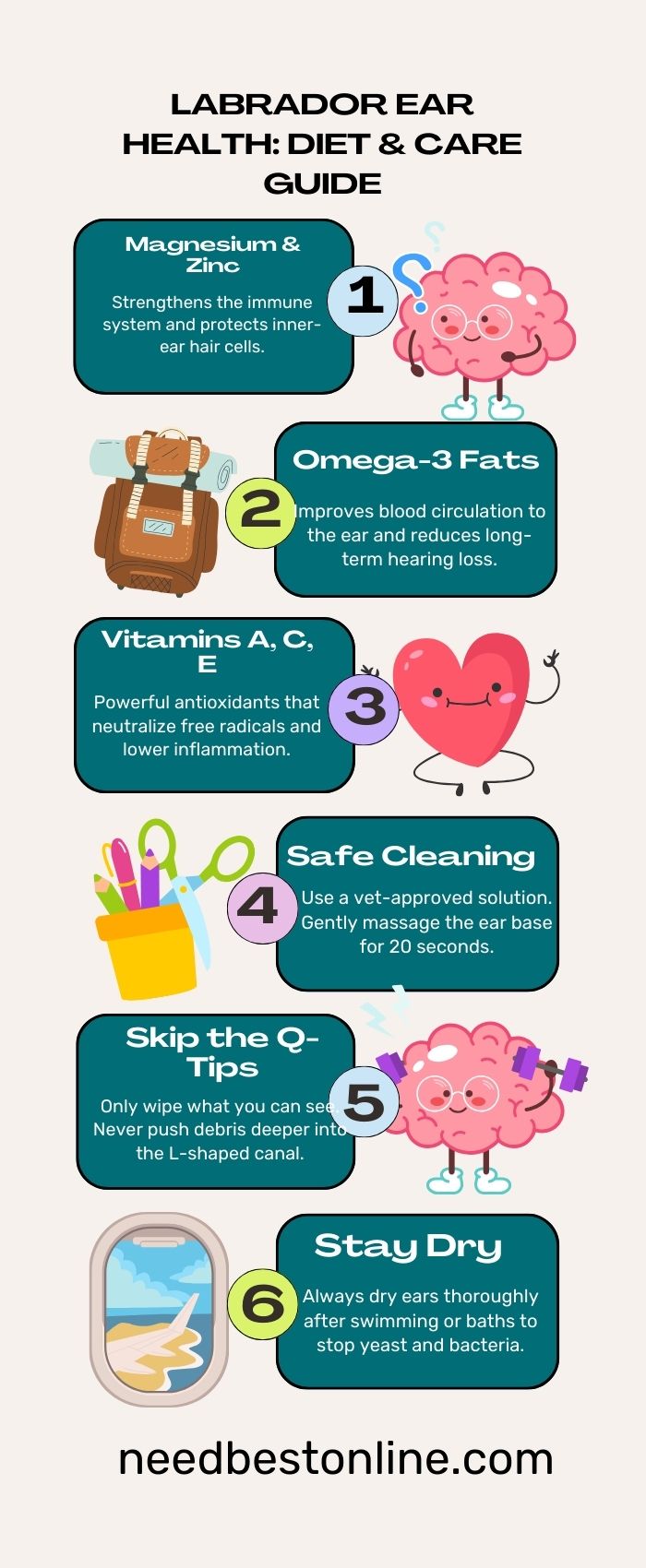
The Quick-Reference Guide for Managing Labrador Ear Health through Diet and Care.
- Antioxidant vitamins (A, C, E) – Protection from damage: Antioxidants help neutralize free radicals that can damage sensitive ear cells and may also help reduce inflammation. Good sources: leafy greens, bell peppers, and berries.
Helpful Dietary Strategies
-
- Focus on foods that support good circulation, such as heart‑healthy ingredients. (Note: Garlic should be avoided as it can be toxic to dogs).
-
-
- Excess salt (sodium): Too much sodium can raise blood pressure and disturb the fluid balance in the inner ear, which may contribute to vertigo or ringing.
-
- Refined sugars: Large spikes in blood sugar can affect small blood vessels and may speed up damage to auditory cells.
-
- Trans fats and heavily processed foods: These can increase inflammation throughout the body, including in delicate sensory tissues.
Cleaning a Labrador’s ears usually involves filling the ear canal with a dog‑safe cleaning solution, gently massaging the base of the ear for 15–20 seconds to loosen debris, and then allowing the dog to shake its head. After that, you wipe away the loosened wax with cotton balls or gauze, focusing only on the visible outer parts of the ear and avoiding cotton swabs.
Key Tips for Safe Ear Cleaning
As per my experience, being careful about the right use of cleaner: It is best to use a veterinary-approved ear cleaner. These are non-irritating and dog-friendly. Avoid using alcohol, hydrogen peroxide, or vinegar unless your vet has specifically told you to.
-
- Massage correctly: As you apply the cleaner, gently massage the base of the ear until you hear a soft squishing sound. This helps to loosen debris in the L-shaped ear canal, allowing the solution to move deeper inside to effectively clean the ear.
-
-
- Skip Q-tips: Avoid inserting cotton swabs or Q-tips into the ear canal. Once, I accidentally pushed debris deeper into my dog’s ear, which can damage the internal eardrum.
-
- Wipe what you can see: Always use cotton balls or soft gauze pads. Gently wipe away debris from the ear flap and the entrance to the canal—don’t overdo it; only clean what is easily visible.
-
- Make it positive: Your dog will cooperate better when you offer treats, calm words, and breaks. This helps your Labrador associate ear cleaning with a positive experience.
-
- Choose a safe frequency: I have observed that many dogs do well with ear cleaning about once a month, but some may need it more or less often depending on their skin, activity levels, and their vet’s advice.
-
- Watch for trouble signs: Watch for severe problems with your dog, such as pus-like discharge, lots of redness, or unusual activity (like constant head shaking). If you see these, it’s time to visit the vet.
How to Identify and Prevent Labrador Ear Infections
In the Labrador breed, identifying ear infections starts with noticing changes in both the appearance and behavior of your lab. Common alarming signs like redness, swelling, a strong odor, or brown/yellow discharge are frequent, especially in dogs with ears that retain moisture easily.
If you adopt a regular practice, you can prevent most infections. Use a vet‑approved solution, dry their ears immediately after a bath, and manage any moisture that enters the ear. If you notice unusual activity like pain, continuous head shaking, loss of balance, or other worrying symptoms, consult your veterinarian for an examination immediately.
How to Spot Ear Infections in Labradors
-
- Behavioral signs: If your lab has an ear infection, you may notice constant scratching at the ear, head shaking, rubbing the head on furniture or the floor, and sensitivity or pain when the ear is touched.
-
-
- Physical signs: In my case, I found my lab’s ear swelled up. Research shows that redness, heat, and a noticeable foul smell also occur.
-
- Discharge: A build‑up of brown, yellow, or bloody, thick discharge coming from the ear canal.
How to Help Prevent Ear Infections
-
- Dry thoroughly: As advised earlier, be careful to keep your lab’s ears dry. After baths, gently dry the ears, because leftover moisture helps bacteria and yeast to grow.
-
-
- Regular cleaning: Always clean your dog’s ears with a cleaner as per the prescription and instructions of your veterinarian.
-
- Avoid irritation: Try to never use cotton swabs (Q‑tips) inside the canal, as there is a possibility of pushing debris deeper and damaging the eardrum.
-
- Manage allergies: Make sure the diet is followed as instructed by your vet if your lab has skin allergies, since these can lead to repeated ear infections.
-
- Keep the area tidy: Regular grooming and trimming helps in improving airflow and reducing moisture build-up.
How Vets Diagnose Ear Infections
If an infection is suspected, you must consult a veterinarian for confirmation. They will find out the type and nature of the infection to start the right treatment at the right time.
-
- Otoscope exam: The vet looks deep into the ear canal to check for inflammation, foreign material, or damage.
-
-
- Cytology: A swab from the ear is examined under a microscope to see whether bacteria, yeast, or both are present, which helps guide medication choices.
Treatment Basics for Ear Infections in Labradors
Core Treatment Basics
Treating ear infections in the Labrador breed requires several stages. It starts with proper guidance from a veterinary diagnosis, followed by cleaning and medication accordingly. Because this breed has floppy ears, a love for water, and potential allergies, they are especially prone to recurring infections.
-
- Veterinary diagnosis: Determining the type of infection is most important. Your vet will examine the ear and declare whether the infection is caused by bacteria, yeast, or resistant organisms such as Pseudomonas.
-
-
- Ear cleaning (flushing): Before applying medication, make sure wax, pus, and debris are removed so the medicine can easily reach the infected tissue. Perform this with your vet; sometimes sedation is necessary if the ear is very painful.
-
- Topical medicated drops: Most cases are treated with medications like antibiotics, antifungals, and/or steroids to reduce inflammation and fight the infection.
-
- Complete the full course: It is important to finish the prescribed medicated course exactly as instructed. Even if you feel the ear condition has improved, finishing the course reduces the chance of the infection coming back stronger.
-
- Follow‑up visit: A recheck after about 1–2 weeks helps confirm that the infection has fully cleared and that no additional treatment is needed.
Labrador‑Specific Care Tips
-
- Dry ears after swimming: Since Labradors love and enjoy swimming, carefully drying the ears with a towel after water activities can help prevent “swimmer’s ear” and reduce the moisture that feeds infections.
-
-
- Address allergies: Many chronic ear problems in Labs are linked to underlying allergies, such as food sensitivities or environmental triggers. Working with your vet on allergy management is key for long‑term control.
-
- Do routine checks: Regularly check your lab for redness, bad odors, or signs of itchiness and pain. This allows you to catch new infections early and get prompt treatment.
Conclusions
Following the official health standards for Labrador Retrievers, proactive ear care and a balanced diet are the best ways to ensure a long, happy life for your dog. By observing your Labrador’s behavior and maintaining a routine of ear care, you can prevent severe, painful infections before they face them in the future.
Secondly Keep your home and their surroundings clean is useful and effective, but only a veterinarian can safely diagnose and treat an active ear infection. Accordingly if you keep those floppy ears clean, dry, and healthy, your Labrador will stay comfortable, energetic, and ready for their next adventure.