Introduction
Being a Labrador owner, you should be aware that those beautiful floppy ears are not only cute, but they are a hub for problems and trouble-making. Labradors’ pendulous ears flop over the ear canal; with such a natural shape, they tend to trap moisture from swims, baths, or humid days, while debris and wax build up inside. As a result, this breed’s ears lead to problems like yeast, bacteria, and inflammation, resulting in classic signs: head shaking, relentless scratching, foul odors, redness, and even balance issues if not treated. According to my veterinary expert, ear infections affect up to 20% of dogs annually, with floppy-eared breeds like Labs hit hardest. He suggested treating this problem naturally at home before consulting the vet.
He also informed me that if your dog is facing a severe infection—i.e., swollen, having discharge, or yelping in pain—immediately consult your vet. If you don’t do this, it may lead to a ruptured eardrum and cause chronic issues. Keep your dog under observation for approximately 24-48 hours; if there is no improvement, then consult your vet.
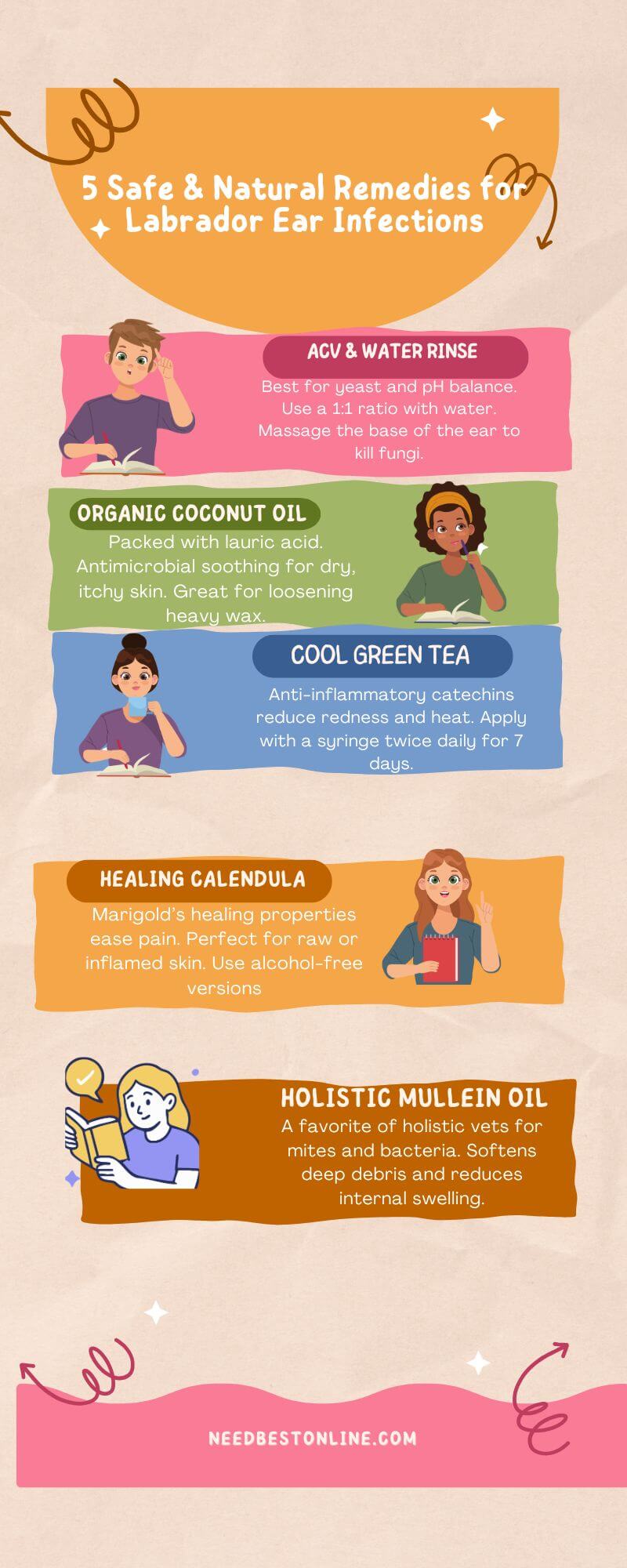
From our best guidance and trusted sources like Dogs Naturally Magazine, Wag!, and Vetericyn, the following are the remedies:
| Remedy | Best For… | Key Benefit | Preparation Time |
| Apple Cider Vinegar | Yeast & pH Balance | Antifungal powerhouse | 1 Minute |
| Coconut Oil | Dry, Itchy Skin | Soothing & Antimicrobial | 2 Minutes |
| Green Tea | Redness & Swelling | Anti-inflammatory | 10 Minutes (Cooling) |
| Calendula | Healing Raw Skin | Promotes skin repair | 2 Minutes |
| Mullein Oil | Mites & Wax Buildup | Softens deep wax | 2 Hours to 4 Weeks |
Apple Cider Vinegar (ACV) & Water Rinse: This is an antifungal technique for pH. Mix equal parts organic ACV and water; apply with a cotton ball or dropper and then massage—gentle and effective, unless the skin is raw.
Coconut Oil: Packed with lauric acid for antimicrobial soothing. Warm it, add a few drops to loosen wax, and massage gently to swipe away debris; this is a best remedy for your dog’s irritated skin.
Green Tea: Its anti-inflammatory catechins eradicate itching and redness. Steep bags in hot water, cool, and apply with a syringe; it also gives best results.
Calendula Tincture: Marigold’s healing properties ease pain and inflammation. Dilute 5-10 drops in water; this helps in application and massage for quick relief.
Mullein Oil: Holistic vets love this for swelling and bacteria. Use pre-made or homemade with olive oil; it easily removes and softens wax.
Pro Cleaning Tips: Ditch Q-tips—they push gunk deeper and risk eardrum damage. Dry ears thoroughly post-swim (Labs live for water!). Use soft cloths or gauze instead.
These remedies empower you to act fast and naturally, saving time and stress. Ready to help your Lab feel better? Dive into the full recipes and step-by-step instructions below!
1. Apple Cider Vinegar (ACV) & Water Rinse
For mild infections, one of the natural remedies is apple cider vinegar (ACV). It offers potential antibacterial and antifungal properties, helping to balance pH and fight yeast—which is best for moisture-prone Labrador ears. To avoid irritation, always use it properly diluted.
Ratios: A standard 1:1 mix of organic ACV and distilled or warm water is recommended. For sensitive ears, use a 1:2 ratio (more water) to minimize discomfort.
Tips: Choose raw, unfiltered ACV “with the mother” for active enzymes. Soak gauze or a cotton ball, massage the base gently, and wipe the visible outer ear flap. Do not use Q-tips or insert anything deep—there is always a high risk.
Avoid If: Avoid this if the ears have open sores, cuts, or severe redness/inflammation (the acidity stings badly). Also avoid it if you suspect a ruptured eardrum (head tilt, balance loss, extreme pain), or notice foul smells or dark discharge. These will not be sorted out with normal home remedies; for this, immediately consult your vet for further treatment.
2. Calendula Tincture
This helps in supporting the healing of skin irritation in Labrador ears. Calendula (marigold) tincture diluted in lukewarm filtered water creates a gentle, anti-inflammatory, and antimicrobial rinse.
Recipe: Mix 5–10 drops of tincture into 1 cup of lukewarm water; always use filtered water and ensure it is fully blended.
Application: Use a clean dropper or sponge to place the solution into the ear canal. To best loosen the debris, gently massage the base for 30 seconds to distribute it. Let your dog shake; wipe away excess debris with a clean cloth or cotton ball.
Key Considerations:
No Alcohol: Don’t use alcohol-based tinctures—they sting inflamed or broken skin. Try to use soothing glycerites; they are excellent for curing.
Temperature: Lukewarm water only; cold water can cause dizziness or discomfort.
Warning: If your dog is facing problems like heavy discharge, extreme pain, or signs of a ruptured eardrum—it needs professional treatment from your vet.
3. Mullein Oil
Another best remedy for mild ear infections or mites at home is Mullein Oil. It acts as a first-aid treatment; use dried mullein flowers (add garlic for an antimicrobial boost).
Slow Solar Method (4-6 Weeks): Use a jar with dried flowers + 1–2 crushed garlic cloves per pint. Cover with olive or avocado oil, seal, and sun-infuse (shake daily), then strain into a dark dropper bottle.
Quick Heat Method (2-4 Hours): Place the jar in a water bath (double boiler) on low heat (do not boil); cool and then strain.
Tips: Use dried flowers (wilt fresh ones to avoid mold). Store in a cool, dark place; refrigerate the garlic version (3–6 months shelf life; the plain version lasts 2 years).
Use: Warm the oil to your dog’s body temperature, apply 2–4 drops to the canal, and massage the base for 1 minute. Repeat 2–3 times daily for mild cases.
Safety: Vet consultation is the best option if you suspect a ruptured eardrum, see blood/pus, or a severe infection.
Step-by-Step Guide to Cleaning Dog Ears with Cotton Balls
Do not push cotton swabs or Q-tips deep into your Lab’s ear—there is a much higher chance of compacting debris or rupturing eardrums. Instead:
Fill: Fill a bulb syringe or dropper with saline or an ear solution.
Apply: Put it into the ear canal; massage gently at the base to loosen gunk (your dog will shake out the debris).
Wipe: With the help of a cotton ball, wipe the outer section of the ear.
Dry: Ensure the ear canal is fully dry before applying meds prescribed by your vet.
Emergency Tip: Use eye saline if no other option is available at the time.
Dog Ear Cleaning Massage Technique: The “Squishing” Sound
While lifting the ear flap, apply your prescribed cleaner and massage gently for 20-30 seconds until you hear a sound like a ‘squish.’ This shows the solution is loosening the wax. Let your dog shake, then wipe the debris from the outer ear with cotton or gauze, only as deep as your finger. Be careful—do not use Q-tips. Stop and make an appointment with a vet if there is pain, blood, pus, or a strong odor.
Signs of a Ruptured Eardrum in Labradors
Indications include foul-smelling yellow, bloody, or pus-like discharge, marked pain, and extreme sensitivity around the head. Neurological signs like head tilt, stumbling, circling, nystagmus (rapid eye movement), and facial drooping may also appear. Common causes include chronic infections, foreign objects, trauma, or ototoxic ear drops. If you find a suspicious rupture, do not put anything in the ear until your vet examines it with an otoscope.
Why? The Research Depth
Coconut Oil: Lauric acid in coconut oil is a medium-chain fatty acid with strong antifungal activity that helps kill Candida yeast on the skin and in the gut. Typically, it soothes itching, hot spots, and inflammation, showing best improvement in skin healing and barrier repair. When ingested, it converts to monolaurin, which may strengthen the immune system against yeast overgrowth. Use organic virgin coconut oil; apply thinly as needed.
Green Tea: This fights yeast-related “black” ear infections and smelly debris while reducing redness and discomfort. Brew 8 oz of water with two bags, let cool, then place 5–10 drops in the ear twice daily for 7–10 days. Gently massage for 20–30 seconds, then dry with cotton.
Prevention & Maintenance
To prevent ear problems, keeping ears clean, dry, and ventilated are the precautions that lead to better health. After a bath or swim, gently dry the ears, use cotton balls to block water, and use a vet-approved drying solution. Make it a habit to clean with only veterinary ear cleaners once every 1–2 weeks (or after each swim)—never use hydrogen peroxide, alcohol, or vinegar.
Improve airflow by having a groomer trim hair around the ear opening (do not pluck it). Inspect weekly for redness, swelling, odor, or behavior changes like increased scratching; these are indications of infection and the need for a vet appointment.
People Also Ask (FAQ Section)
When not to use hydrogen peroxide? Avoid using it directly on the skin. Dr. Pickering Beers says, “Hydrogen peroxide irritates the skin and can prevent a wound from healing.”
Is 3% hydrogen peroxide safe to touch? It is generally safe at household concentrations (3%) but can be dangerous if used inappropriately. Industrial concentrations (up to 70%) can cause significant harm.
Is hydrogen peroxide safe for skin? It is corrosive to skin and eyes at high concentrations (>10%). Lower concentrations still cause irritation.
Conclusion
Apple cider vinegar, coconut oil, green tea, calendula, and mullein are great natural sources that bring relief to mild Labrador ear issues when used safely. However, they are not an alternative to professional care. If your dog shows severe pain or no improvement within 24–48 hours, contact your veterinarian immediately.
While these home remedies are great for immediate relief, the real secret to stopping chronic infections is inside your Lab’s bowl. If your dog keeps getting itchy ears, it’s time to look at their nutrition. Check out my full guide on the Best Non-Prescription Food for Labradors with Ear Infections to fix the root cause.
Where to put your internal links:
“Precautions” (in Prevention section): Link this to your Best Labrador Dog Food for Sensitive Stomachs post.
“Look at their nutrition” (in Conclusion): Link this to your Best High Protein Wet Dog Food post.
“Best Non-Prescription Food for Labradors with Ear Infections” (at the very end): Link this to your specific post on that topic.
“Strengthen the immune system” (in the Coconut Oil section): Link this to your How Long Do Probiotics Take to Work post.